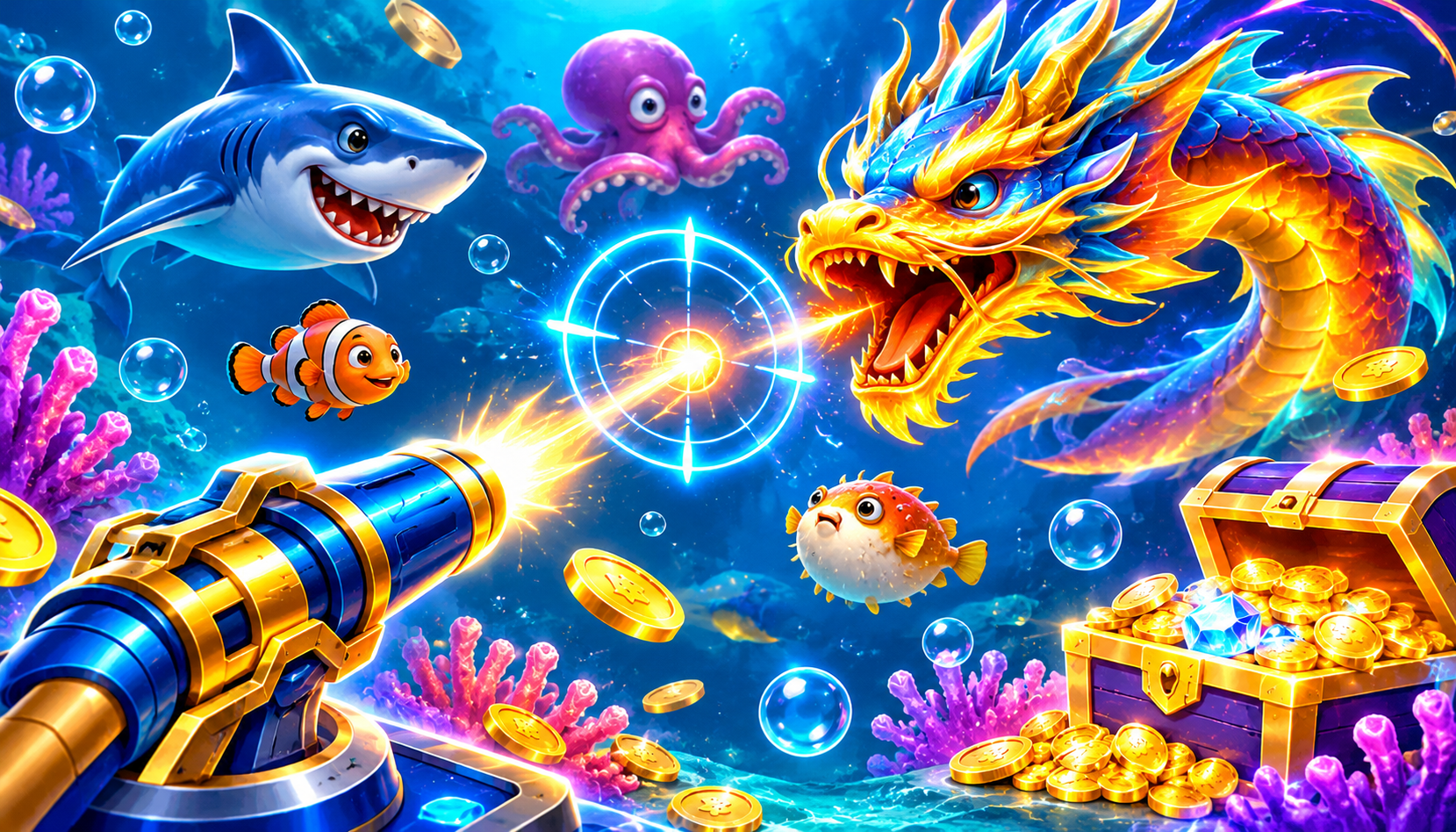
Bright tropical fish drift across an underwater scene. Turtles paddle past, schools of small fish dart in every direction and a giant golden dragon glides slowly through the middle of the screen. You aim your cannon, fire and watch as fish burst into coins. Fish shooting games look and feel more like arcade titles than traditional casino games, and that playful style has made them hugely popular across Asia and increasingly with players in Australia.
This guide explains how fish shooting games work, from cannons and bullet costs to fish values, special targets and multiplayer tables. It also looks at how much skill is really involved, how payouts are determined and how to enjoy this fast paced format with a sensible budget.
Where Fish Shooting Games Came From
Fish shooting games began as coin operated arcade machines in East Asia, where groups of players would gather around large screens, each controlling a cannon at their own station. The social, competitive atmosphere made them a fixture in arcades and gaming venues.
Online casinos later adapted the format for computers and phones. The core idea remains the same: shoot fish to earn rewards. Online versions add sharper graphics, more varied targets and features such as bonus rounds and special weapons.
Fish shooting games appeal to a slightly different audience from pokies or table games. Players who enjoy video games often like the hands on feel of aiming and firing, while those who enjoy social play appreciate multiplayer tables. For Australian players looking for something new, fish shooting games offer a refreshing change of pace from spinning reels.
The Basics of Play
In a typical fish shooting game, you control a cannon at the edge of the screen. Each shot costs a set amount, which acts as your bet. When a bullet hits a fish, there is a chance the fish will be captured. If it is captured, you receive a payout based on that fish’s value multiplied by the cost of your bullet.
Small fish usually have low values but are captured more easily. Larger fish have higher values but may take several hits before they are captured, if at all. The challenge lies in deciding which targets to aim for and how much to spend on each shot.
Bullet Cost and Cannon Level
Most games let you adjust the cost of each bullet, sometimes shown as upgrading your cannon level. A more powerful cannon costs more per shot but multiplies the payout of any fish you capture. Lower levels cost less and let your balance last longer. Choosing a bullet cost that fits your budget is one of the most important decisions in fish shooting games.
A simple way to plan is to decide how many shots you would like your session budget to cover. If you set aside 30 dollars and want to fire around 300 shots, a bullet cost of 10 cents fits neatly. This approach keeps fish shooting games relaxed and helps you avoid running through your balance in the first few minutes of play.
Fish Values and Special Targets
Every fish has a value, usually displayed in the game’s paytable or information screen. Common small fish might pay 2 to 5 times your bullet cost, while larger species might pay 20, 50 or 100 times. Special creatures, such as dragons, mermaids or giant crabs, often carry much higher values.
Many games also include special targets with unique effects. A bomb fish might capture all nearby fish at once. A lightning creature might chain shots between several targets. Some fish trigger bonus wheels or mini games when captured, adding extra variety to each session.
Boss Fish
Boss fish are the headline attractions. They usually appear at set times or randomly, swim slowly across the screen and carry large potential payouts. Because they are hard to capture, players often spend many bullets trying. Deciding in advance how much you are willing to spend on any single target helps keep sessions under control.
Single Player and Multiplayer Tables
Some fish shooting games are played solo, with only your cannon on screen. Others place you at a shared table with several players, each controlling their own cannon. In multiplayer games, everyone shoots at the same fish, and whoever captures a fish receives its payout.
Multiplayer tables can feel lively and social, recreating the atmosphere of an arcade. However, they can also encourage faster shooting and higher spending, as players compete for the same targets. Staying focused on your own budget, rather than keeping pace with others, is important.
How Much Skill Is Involved
Fish shooting games feel skill based because you aim and choose your targets. In practice, outcomes are determined largely by chance. Each fish has a capture probability built into the game, and whether a particular shot captures a fish is decided by a random number generator.
Aiming and target choice can influence how you spend your bullets, but they do not change the underlying odds. Every game also has a built in house edge, similar to other casino games. Understanding this keeps expectations realistic and prevents the belief that practice alone can guarantee results.
Return to Player in Fish Games
Many fish shooting games publish a return to player figure, which shows how much of the money wagered is designed to be paid back over time. RTP varies between titles, so checking the information screen before you play helps you compare games. As with all casino games, RTP describes long term design rather than short term results.
Managing Your Budget in a Fast Game
Fish shooting games move quickly, and many include auto fire or auto aim features that shoot continuously. This can make it very easy to use up your balance faster than you realise. Setting a clear budget before you start, and checking your balance regularly, is essential.
A helpful approach is to choose a lower bullet cost so your balance lasts longer, and to use manual shooting rather than auto fire. Deciding on a stopping point, both for losses and for wins, also helps you end each session on your own terms.
Taking short breaks between rounds can also help. Because fish shooting games are so visually busy, stepping away for a few minutes gives you a chance to check your balance with a clear head and decide whether to continue.
Playing Fish Shooting Games at AUSWIN Casino
A good platform makes fish shooting games easy to find, clearly explains fish values and features and runs smoothly on both mobile and desktop. For Australian players curious about this arcade style format, AUSWIN Casino brings fish shooting titles together with pokies, live dealer tables and other games in one convenient account.
Open the arcade or fishing games section, choose a title and read its information screen to learn the fish values, bullet costs and special features. Start at a low cannon level while you get used to the pace of the game.
Understanding a Game’s Features
Each fish shooting game has its own special targets and bonus features. If something is unclear, you can ask AUSWIN live chat how a fishing game pays and get a straightforward explanation before you start shooting.
Common Misconceptions
One common misconception is that a fish that has been hit many times is about to be captured. Each shot is decided independently, so previous hits do not guarantee a capture. Another is that certain cannon positions or angles produce better results. Positioning affects which fish you can reach, but it does not change capture probabilities.
Some players also believe that boss fish are due to be captured after a long period without one. Like every outcome in the game, boss captures are random.
Keep the Arcade Fun in Check
Fish shooting games offer colourful, lively entertainment, but they are still gambling games with real money at stake. Treat every session as entertainment, set your budget and time limit before you start and stop when you reach either one. Avoid chasing boss fish or losses with higher bullet costs.
If you find yourself spending more than planned, relying on auto fire for long periods or feeling frustrated with results, take a break and use the deposit limit and time out tools in your account. With clear limits in place, fish shooting games can remain a fun and light hearted change of pace.